Modern businesses no longer operate within the safety of a single office network. Laptops move between homes and workplaces, employees access systems from personal devices, and cloud applications are used across locations. Each of these endpoints represents a potential entry point for threats.
This shift has made real-time visibility and control essential. Managed endpoint services are no longer a “nice to have” for IT teams — they are a foundational layer of enterprise security.
Why Endpoints Are the Weakest Link
Endpoints are often targeted because they sit closest to users. Phishing emails, malicious downloads, unsecured Wi-Fi networks, and outdated software all create opportunities for attackers to gain access.
What makes endpoints especially vulnerable is scale. As the number of devices grows, manual monitoring becomes impractical. Gaps in visibility allow threats to go undetected until damage is already done. This is where endpoint management services change the equation.
What Real-Time Monitoring Actually Means
Real-time monitoring is not just about alerts. It involves continuous visibility into device behaviour, system health, and security posture across the organisation.
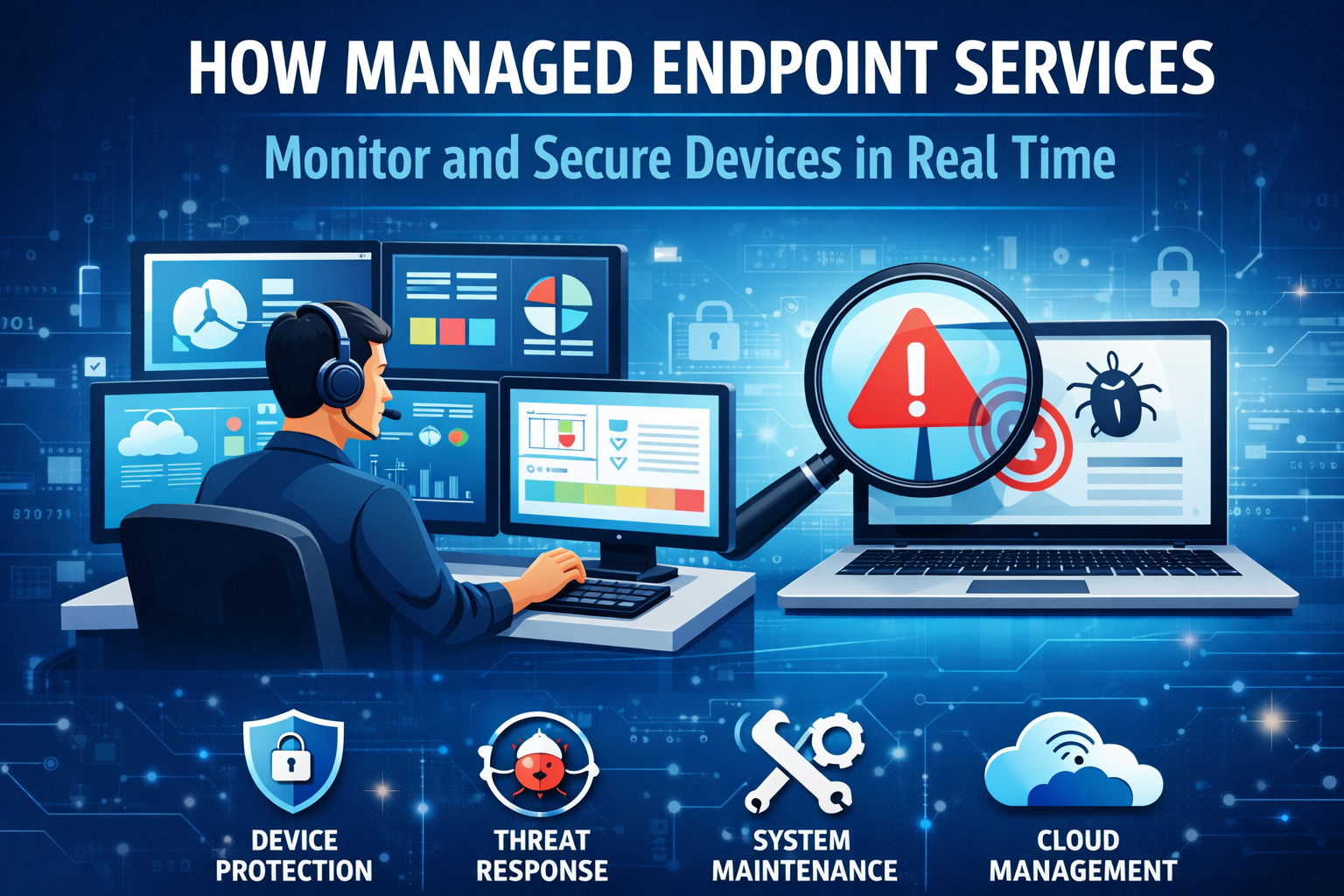
Managed endpoint services track activity such as login attempts, software changes, unusual network behaviour, and compliance status. Instead of reacting after an incident, IT teams gain the ability to detect anomalies as they occur and respond immediately.
Proactive Threat Detection and Response
One of the key advantages of managed endpoint services is proactive threat detection. Advanced tools analyse behaviour patterns rather than relying solely on known threat signatures.
This allows suspicious activity to be identified even if it does not match a previously known attack. When threats are detected, automated responses can isolate devices, block processes, or trigger remediation workflows before issues escalate.
Centralised Control Across All Devices
As organisations grow, managing endpoints individually becomes inefficient and risky. Endpoint management services centralise control, allowing IT teams to apply policies, updates, and security rules across all devices from a single platform.
This consistency ensures that devices remain compliant regardless of location or user behaviour. Updates, patches, and configurations are deployed uniformly, reducing exposure caused by outdated or misconfigured systems.
Securing Remote and Hybrid Workforces
Remote and hybrid work models have expanded the attack surface dramatically. Devices are now used outside traditional network perimeters, often on unsecured connections.
Managed endpoint services extend security controls beyond the office network. Devices remain monitored and protected wherever they are used, ensuring that remote access does not translate into increased risk.
Compliance, Auditing, and Visibility
Regulatory and internal compliance requirements increasingly demand proof of active security controls. Endpoint visibility plays a critical role in demonstrating due diligence during audits.
Endpoint management services provide detailed reporting on device status, security incidents, and remediation actions. This documentation helps organisations meet compliance requirements while maintaining operational transparency.
Reducing IT Burden and Operational Risk
Without managed services, IT teams often spend disproportionate time reacting to endpoint issues. This reactive approach increases workload and diverts attention from strategic initiatives.
By outsourcing monitoring and response to managed endpoint services, organisations reduce operational strain while improving security outcomes. IT teams gain breathing room without sacrificing control or visibility.
Endpoints are no longer peripheral assets — they are central to how businesses operate and how attackers gain access. Securing them requires continuous oversight, not periodic checks.
With expertise in delivering robust endpoint management services, Supercad helps organisations move from reactive security to real-time protection, ensuring devices remain secure, compliant, and resilient in an increasingly distributed digital environment.