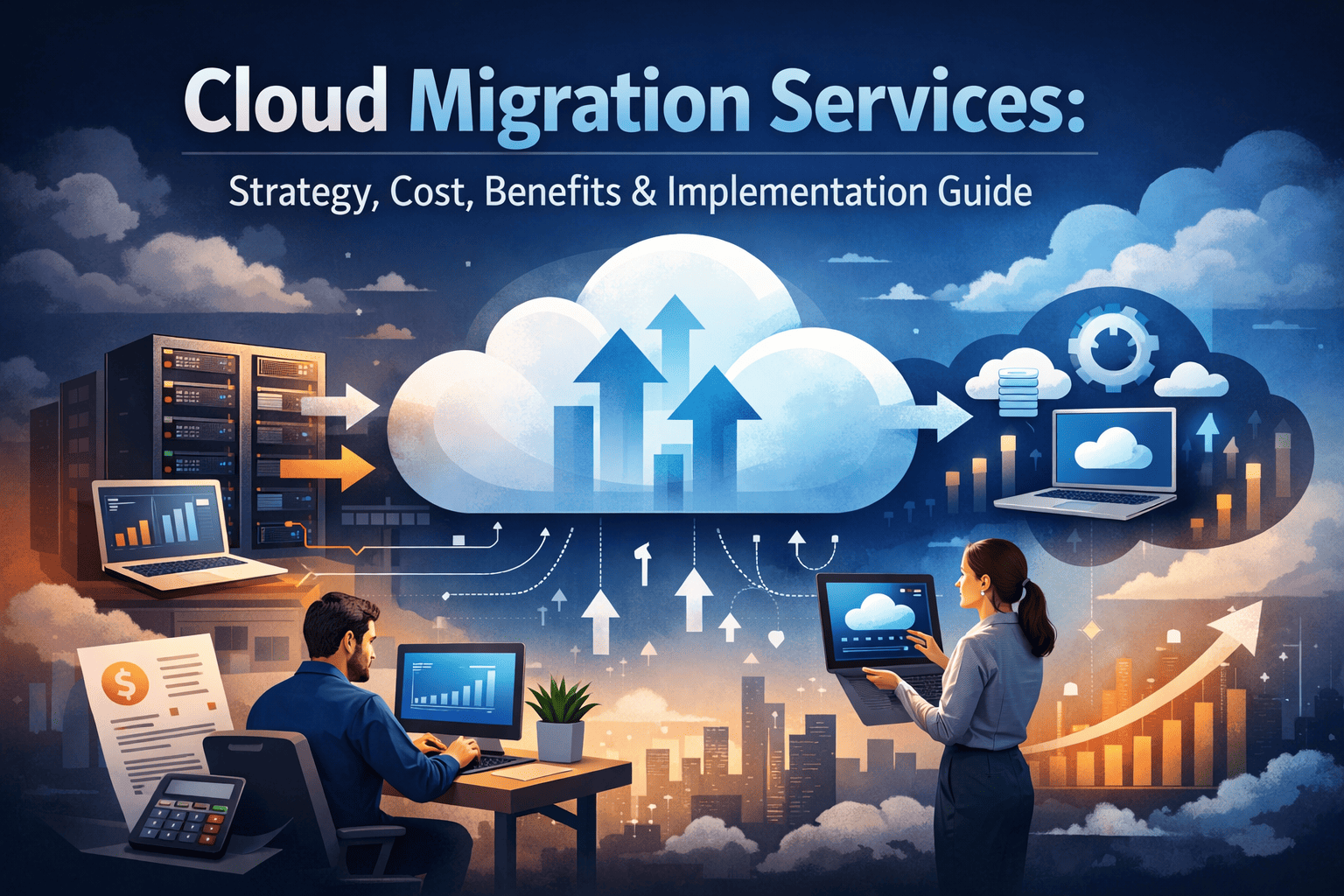
Cloud migration services in Dubai help businesses move their data, applications, and systems to the cloud through a structured approach that balances cost, performance, and security. With the right strategy, companies in the UAE can improve scalability, reduce infrastructure costs, and future-proof their operations.
Moving to the Cloud Isn’t Just a Technical Shift
A lot of businesses still think cloud migration is about “moving servers online”, when it’s actually not. It’s a shift in how your entire system operates — how data flows, how applications perform, and how your team accesses and uses information.
Done right, it simplifies operations and reduces dependency on physical infrastructure. Done poorly, it creates downtime, unexpected costs, and performance issues.
That’s why cloud migration needs to be approached as a business decision, not just an IT task.
Why More Businesses in Dubai Are Migrating to the Cloud
The push toward cloud computing services in Dubai isn’t just about trends; it’s driven by practical needs. Businesses are dealing with growing data volumes, remote work setups, and the need for faster, more flexible systems.
Cloud environments make it easier to scale operations, access systems from anywhere, and reduce reliance on physical hardware. Instead of investing heavily in servers that need ongoing maintenance, companies are shifting toward infrastructure that adapts as they grow.
Done right, it simplifies operations and reduces dependency on physical infrastructure. Done poorly, it creates downtime, unexpected costs, and performance issues.
That’s why cloud migration needs to be approached as a business decision, not just an IT task.
What Actually Happens During Cloud Migration
Most people imagine a simple “transfer” — but in reality, migration is a phased process. It starts with understanding your current setup. Not everything should be moved the same way. Some applications can shift directly, while others need restructuring or optimization before migration.
Then comes planning. This includes defining timelines, identifying risks, and ensuring there’s minimal disruption to daily operations.
The actual migration is just one part of the process. What matters more is how systems perform after the move — whether they are stable, secure, and efficient.
Benefits That Go Beyond Cost Savings
While cost is important, the real value of cloud migration shows up in how your business operates. You get faster access to data, improved system performance, and the flexibility to scale without major infrastructure changes. Security also improves when systems are properly configured, with better backup, recovery, and monitoring capabilities.
But most importantly, it gives businesses the ability to adapt quickly — whether that’s launching new services, handling increased demand, or supporting remote teams.
Where Cloud Migration Can Go Wrong
This is where most of the problems happen. Migrating without a clear strategy leads to downtime, data loss risks, and systems that don’t perform as expected. Another common issue is treating all applications the same. Some systems need to be re-architected, not just moved. Skipping that step can lead to inefficiencies later.
And then there’s cost mismanagement — not tracking usage properly, which results in unnecessary spending. These are not technical mistakes. They’re planning mistakes.
Building a Migration Strategy That Actually Works
A strong cloud migration strategy is less about speed and more about clarity. It starts with defining what success looks like, whether that’s cost reduction, performance improvement, or scalability. From there, systems are assessed, prioritized, and migrated in phases to reduce risk.
Testing and optimization follow, ensuring everything runs as expected before fully transitioning operations. This structured approach is what separates smooth migrations from problematic ones.
Making the Shift Without Disrupting Your Business
The biggest concern for most businesses is disruption. Downtime affects operations, revenue, and customer experience. That’s why migration needs to be carefully timed and executed in stages.
With the right planning and support, businesses can transition to the cloud without interrupting daily workflows, and often with noticeable improvements in performance.
Getting Cloud Migration Right from the Start
Cloud migration is one of those decisions where doing it right the first time makes all the difference. It’s not just about choosing a platform — it’s about understanding your systems, managing costs, and ensuring long-term performance.
This is where experienced providers of cloud migration services in Dubai play a key role, helping businesses move with clarity instead of trial and error. Because in the end, cloud isn’t just about where your systems live; it’s about how well they work for your business.